Encouraging Early Mathematical Thinking
Mathematics is often viewed as a daunting subject, one that can instill a sense of dread in students and parents alike.
However, the roots of mathematical thinking are deeply embedded in our everyday lives, and fostering an early appreciation for numbers and patterns can be a rewarding journey.
Encouraging early mathematical thinking in young children can set the stage for a positive relationship with math for years to come, nurturing problem-solving skills, logical reasoning, and even creativity.
Creating a nurturing environment for mathematical exploration begins at home. Everyday activities can be transformed into opportunities for children to engage with math concepts. For instance, cooking together can be a delightful way to explore measurements and fractions. When children help measure ingredients, they not only learn about quantities but also develop an understanding of how different units relate to one another. A dash of salt or a cup of flour can become a playful lesson in estimation and comparison.
Similarly, shopping can serve as a practical lesson in budgeting and counting. Involving children in discussions about prices, discounts, and the total cost can make them more aware of the value of money while enhancing their number sense. As they help tally the items in the cart, they gain practical experience in addition and subtraction, often without even realizing they are learning.
The outdoors can also be a fantastic classroom for young minds. Nature is full of patterns and shapes just waiting to be discovered. A walk in the park can inspire conversations about symmetry in leaves, the number of petals on flowers, or the various shapes of stones. Encouraging children to collect items such as twigs or rocks can lead to activities involving sorting, grouping, and counting. These hands-on experiences can ignite curiosity and foster an appreciation for the mathematical concepts that exist within the natural world.
Incorporating games into daily routines can further enhance mathematical thinking. Board games that involve counting, strategy, or probability can be both fun and educational. Simple card games or even traditional favorites like Monopoly can introduce concepts of addition, subtraction, and critical thinking. As children engage in these activities, they learn to navigate challenges and develop resilience, skills that are invaluable in both mathematics and life.
A gentle shift toward balance can also be achieved through storytelling. Many children’s books incorporate mathematical themes, whether it’s counting animals, exploring shapes, or discussing measurements in a whimsical context. Reading these stories together not only fosters a love for literature but also allows children to see math as a part of their everyday narrative. When math is woven into stories, it feels less like a subject to be feared and more like a natural part of life’s adventures.
As children grow, their mathematical thinking can be nurtured through open-ended questions that encourage exploration and critical thinking. Instead of simply asking, “How many apples are there?” parents can pose more engaging inquiries like, “If we add one more apple, how many will we have?” This invites children to think deeper, fostering an environment where they can experiment with their ideas and learn from their mistakes. Encouraging them to explain their thought processes helps develop their reasoning skills and boosts their confidence in expressing their understanding.
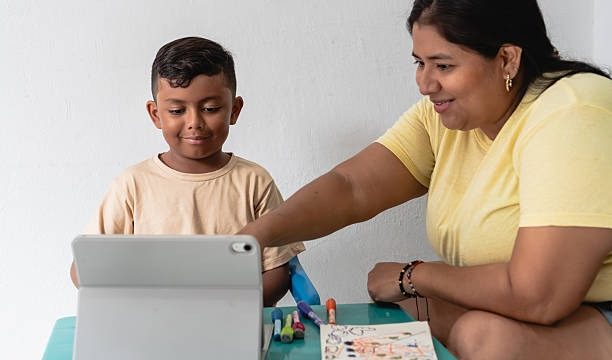
In today’s digital age, technology can also play a role in cultivating early mathematical thinking. There are countless educational apps and online resources designed to make learning fun and interactive. These platforms often incorporate games that challenge children’s problem-solving abilities while allowing them to progress at their own pace. However, it’s essential to strike a balance between screen time and hands-on activities, ensuring that children experience a variety of learning opportunities.
Fostering a love for math also involves creating a supportive atmosphere where children feel comfortable asking questions and expressing uncertainty. It’s important for parents and educators to model a positive attitude toward math, demonstrating that it’s okay to struggle with challenging concepts. By sharing personal experiences, such as moments of confusion or triumph in their own mathematical journeys, adults can help children see that learning is a process, often involving trial and error.
Creating a space for creativity within mathematics can further enhance children’s engagement. Encouraging them to explore art through geometric shapes, or to use building blocks for structural design, allows them to see math as a tool for self-expression. This blending of creativity and logic can spark a passion for learning that transcends traditional classroom boundaries, making math feel more relevant and exciting.
As children begin to develop their mathematical thinking, celebrating their successes—no matter how small—can reinforce their confidence and motivation. Acknowledging their efforts and progress, rather than just the end results, helps cultivate a growth mindset. This approach encourages children to embrace challenges and view setbacks as opportunities for learning.
In conclusion, encouraging early mathematical thinking is a multifaceted endeavor that can be woven into the fabric of daily life. By creating a rich environment filled with exploration, creativity, and support, parents and caregivers can help children develop a positive relationship with math. Whether through cooking, shopping, or engaging in playful activities, every moment can be an opportunity for discovery. As children grow to appreciate the beauty and utility of mathematics, they will carry these skills with them, empowering them to navigate the world with confidence and curiosity. The journey toward mathematical understanding is not just about numbers; it’s about fostering a lifelong love of learning.